


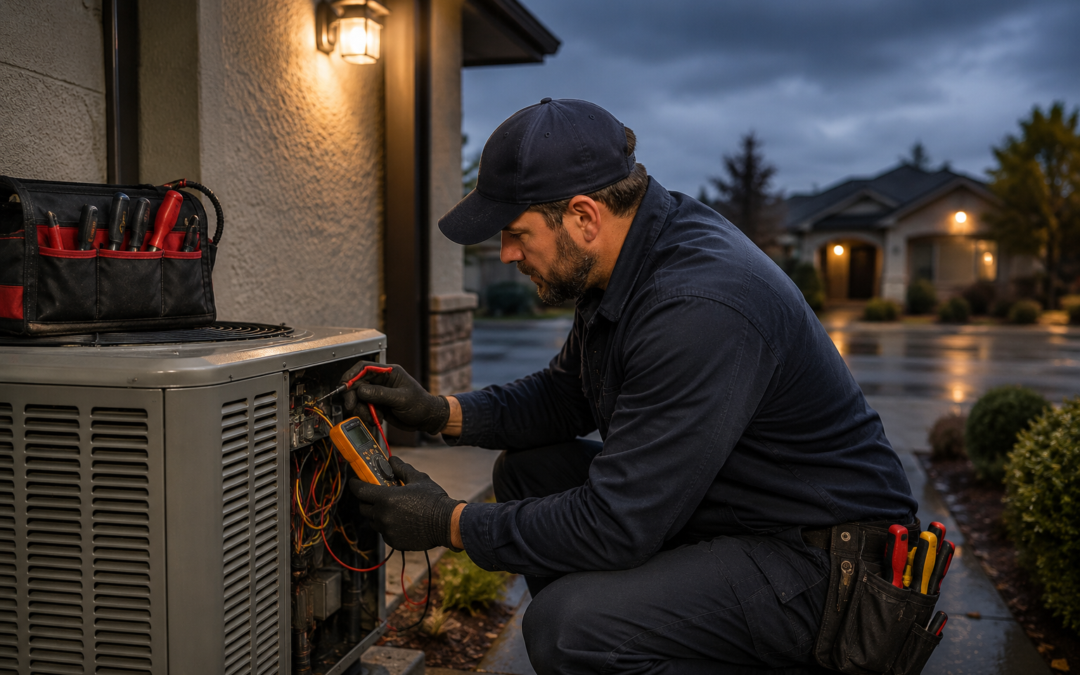
Few things throw off a day faster than losing heating or cooling without warning. One minute the system is humming along, then the vents go quiet or start blowing the wrong temperature. Emergency hvac repair helps get answers when your home feels uncomfortable and you need help right away.
When Emergency HVAC Repair Is Needed
Some HVAC issues can wait for a regular appointment, especially when the system still keeps your home comfortable. Others make waiting feel impossible, like a furnace that will not start during a cold night. Emergency hvac repair is meant for those moments when comfort and safety need attention sooner.
A complete loss of cooling during a heat wave can make a home miserable fast. This becomes even more serious when young children, older adults, or pets are inside. Indoor temperatures can rise quickly, especially in upstairs bedrooms or homes with strong afternoon sun.
A furnace that will not produce heat deserves prompt attention during cold weather. You may notice the thermostat set high while rooms remain chilly and uncomfortable. The system may run for several minutes without delivering warm air through vents.
Electrical smells near HVAC equipment also deserve immediate attention from a professional. Turn the system off if you smell burning, hear buzzing, or see smoke. Do not keep restarting it and hoping the problem disappears, because that can make things worse.
Water leaking around an indoor unit can also call for fast service. A blocked drain line may cause water to overflow near walls or flooring. Moisture can create damage quickly when it is left sitting inside the home.
If you are unsure about the severity of an issue, give us a call. We can talk through what you are seeing and help you decide what comes next. You do not need to figure everything out alone while the house feels uncomfortable.
Signs Your System Is Heading Toward Trouble
Most systems give small warning signs before a sudden breakdown happens. A new rattle, longer run times, or weaker airflow can all matter. Paying attention early can save you from an uncomfortable surprise later.
Emergency hvac repair often starts with an issue that was easy to overlook. Maybe the AC was cooling, but the house never felt quite comfortable. Maybe the furnace started later than usual, then finally stopped responding one morning.
Short cycling is another sign that should not be ignored. The system turns on, runs briefly, then shuts off before finishing its job. That repeated pattern can wear down components and make your home feel uneven.
Strange noises are worth taking seriously when they keep coming back. A loud bang during startup can point to ignition trouble inside a furnace. Grinding can signal worn moving parts that need attention before they fail.
An energy bill that rises without a change in your daily habits can help tell the story. The system may be using more power because it is working harder. That extra strain can be a warning that a repair is coming.
Weak airflow can also lead to a frustrating chain reaction in your home. One room feels cool while another stays warm, and the thermostat never seems right. Sometimes the problem is a dirty filter, though other times the equipment needs closer inspection.
What To Do Before We Arrive
When an HVAC system stops working, it is easy to feel stressed and start flipping switches. Take a breath first, then look for a few simple things. Your safety matters more than getting the system running in a hurry.
Start by checking the thermostat setting and making sure it has power. Confirm that it is set to heat or cool as needed. A thermostat setting can sometimes explain why the system is not responding.
Next, check the air filter if it is easy to access. A badly clogged filter can limit airflow and cause the equipment to struggle. Replace it if you have a clean, compatible filter available at home.
Look at your electrical panel for a tripped breaker connected to the HVAC equipment. If a breaker has tripped once, reset it one time only. Repeated trips can point to an electrical issue that needs professional attention.
Do not open panels or touch wiring inside the system. HVAC equipment combines electricity, moving parts, and sometimes gas connections. That mix is best left to trained technicians with the right tools.
If you notice a gas smell, leave the home and contact your gas utility. Do not operate electrical switches, light matches, or use your phone inside. Once you are safe, contact us for heating system support.
These simple steps can help narrow down the problem before we arrive. They can also help you avoid making the issue worse while waiting. Emergency hvac repair works best when the system is left in a safe condition.
How We Approach Emergency HVAC Repair
When we arrive for emergency hvac repair, we begin with the details you noticed. The time of day, sounds, smells, and system behavior can all help. Your observations give us a useful starting point before testing begins.
We inspect the equipment and test how it responds during normal operation. That may include checking electrical components, airflow, and system controls. We also look for clues that point to a larger issue behind the immediate failure.
The goal is to find the actual source of the problem. A furnace that will not start may have an ignitor issue or safety lockout. An AC that runs without cooling may have airflow trouble or an electrical component failure.
After we identify the problem, we explain what we found in plain language. We share the repair options and answer questions before doing the work. You should know what is happening inside your system before repairs begin.
Some repairs are straightforward and can be handled during the same visit. Other issues may involve a part that needs to be ordered. If that happens, we explain the next steps and help you understand the timeline.
You can explore our full range of HVAC services for a closer look at repairs, maintenance, installation, and other home comfort support. We bring the same careful approach to every type of HVAC work.
Emergency Furnace Problems
A furnace failure can make the house feel cold before you have time to react. The thermostat may show that it is calling for heat, but no warm air arrives. Blankets help for a little while, though they do not solve the underlying problem.
Ignition trouble is one common source of emergency heating calls. The furnace may click, try to start, then shut down before producing heat. A worn ignitor, dirty flame sensor, or control problem can interrupt the heating cycle.
Blower issues can also affect heating performance in a big way. The furnace may produce warm air inside the unit but fail to move it. You may hear the system running while the vents feel weak or completely still.
A furnace that repeatedly shuts off can leave rooms chilly and uneven. Safety controls can stop operation when the system detects something abnormal. We inspect the equipment carefully to understand why it is shutting down.
Noises matter too, especially loud banging or grinding sounds. Those sounds can point to mechanical issues that should be inspected soon. Turning the system off and calling for service can help limit further damage.
Emergency Air Conditioner Problems
Losing cooling during summer heat can turn a normal day upside down. The house grows warmer, sleep becomes harder, and every room feels sticky. Emergency hvac repair can help when your AC stops keeping up.
Your air conditioner may be running but still blowing warm air. That can happen when the system has a refrigerant issue or airflow restriction. Electrical components can also fail and leave the cooling cycle incomplete.
Frozen evaporator coils can lead to weak airflow and poor cooling. You might notice ice around the equipment or water nearby after it melts. Shut the system down and call us instead of forcing it to continue.
A loud outdoor unit deserves attention if the sound is new or harsh. A fan problem can cause rattling, while electrical issues may create buzzing. The unit should not sound like it is struggling to keep itself together.
Drainage problems can also become urgent when water leaks around the indoor equipment. A blocked drain line can spill water where it does not belong. Fast attention can help protect nearby floors, ceilings, or walls from damage.
Why Homeowners Call Mod HVAC
Emergency hvac repair is stressful because it happens when your home needs comfort most. We work to make the service experience feel easier from the first conversation. You should not feel left in the dark about the system or repair.
We arrive ready to inspect the issue and explain what we find. Our recommendations focus on the condition of your equipment and your home’s needs. We believe homeowners deserve useful information without a lot of confusing jargon.
If you want to know more about the people behind the work, learn about Mod HVAC. We bring a practical, hands-on approach to heating and cooling concerns.
Our work should look as good as it performs once the job is done. You can browse our HVAC project gallery for a closer look at completed systems and craftsmanship. Attention to the details matters when equipment needs to work for years.
Hearing from other homeowners can also make a stressful situation feel less overwhelming. Our customer testimonials share real feedback from people who trusted us with their home comfort. Their experiences show what it feels like to work with our team.
FAQs
What counts as an emergency HVAC issue in my home?
Complete loss of heating or cooling, burning smells, water leaks, and unsafe conditions can require prompt professional attention.
Should I turn off my system before emergency hvac repair arrives?
Turn it off if you smell burning, hear harsh noises, see leaks, or suspect a safety concern.
Can a dirty air filter cause my HVAC system to stop?
A severely dirty filter can restrict airflow and cause strain that interrupts normal system operation.
Why is my AC running but not cooling the house?
Restricted airflow, electrical problems, and refrigerant concerns can keep an air conditioner from cooling properly.
What should I do if my furnace smells like gas?
Leave the home immediately, contact your gas utility, and avoid switches or flames inside the house.
Can you repair my HVAC system during an emergency visit?
Many common problems can be repaired during the visit, depending on the diagnosis and required parts.
Comfort Should Not Have To Wait
When your heating or cooling fails, Mod HVAC is ready to help you get answers. Reach us through our contact page to schedule emergency hvac repair and bring comfort back home.